ComfyUI for AI Video:
A Professional Workflow for Visual Creation
Introduction: Rethinking AI in Visual Production
We often hear that AI is homogenizing creativity.
I believe the opposite. When used by professionals, AI can push creative boundaries much further, especially in the fields of image and video production.
Yet in practice, most current uses fall far short of that potential.
Today, AI is still often reduced to simplified interfaces: you type a prompt, click a button, and get a result.
All-in-one tools such as Google VEO, MidJourney, or Runway are useful and sometimes impressive. However, they provide only a partial view of what AI can truly achieve when the goal is control, creative depth, and fully mastered visual workflows.
The future of generative AI is not just about prompting.
Real value emerges when you understand the models, structure workflows on your own workstation, and gain fine-grained control over parameters.
This is precisely where ComfyUI fundamentally changes the game.
What Is ComfyUI?
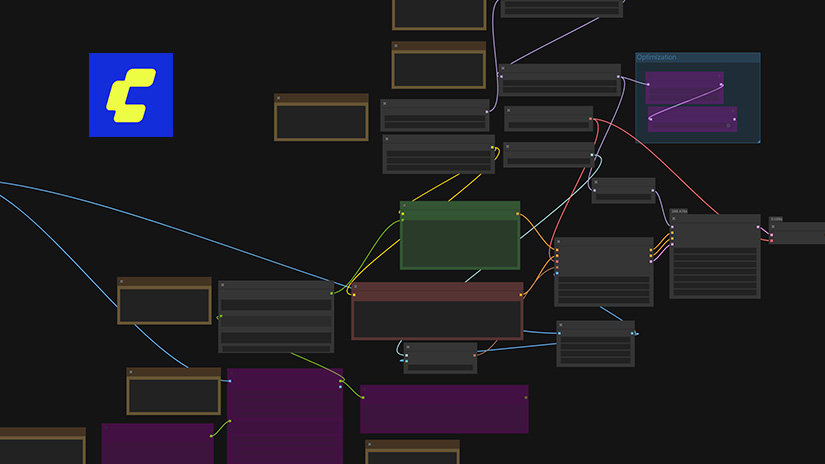
ComfyUI is a node-based, local, open-source working environment.
Unlike ready-to-use online platforms, it does not attempt to hide complexity. Instead, it exposes it in a structured and actionable way.
Every stage of the process is visible, editable, and controllable:
generation, transformation, animation, visual consistency, and final rendering.
ComfyUI is not designed to produce results in a single click.
It is designed to build workflows—pipelines tailored to specific needs, reproducible and scalable over time.
Creating avatars with ComyfUI
Why ComfyUI Is Different
ComfyUI is not a plug-and-play platform.
It is a node-based environment that exposes the entire production chain:
generation, animation, consistency control, rendering, upscaling.
Where online tools abstract away complexity, ComfyUI gives you direct access to control:
fine-tuned parameter adjustments
structured workflow logic
controlled iteration
genuine creative freedom
Let’s be clear: there is currently no online tool offering the same level of precision and control as ComfyUI.
And that is exactly what makes it relevant for demanding use cases, such as creating credible AI-driven video avatars.
Designed for Professional Workflows
This approach makes ComfyUI particularly relevant for professional environments, including:
creative studios
motion designers
agencies
R&D teams
As AI video applications become more sophisticated, requirements evolve:
long-term consistency, artistic control, reproducible pipelines, integration into existing production workflows.
In this context, ComfyUI is not a niche alternative.
It is gradually emerging as a structuring tool capable of supporting the evolution of the image and video industry.
Learning Curve: A Deliberate Choice
Let’s be honest:
There is currently no online tool that offers the same level of precision, control, and creative freedom as ComfyUI.
As AI video workflows become more complex, professionals need more than fast outputs—they need reliability, adaptability, and transparency.
ComfyUI requires time to master.
Its node-based logic demands understanding.
But that requirement is also its greatest strength.
Conclusion
Today, two clear approaches coexist.
On one side, those who rely on all-in-one platforms like Runway, Kling, or VEO and primarily work through prompting.
On the other, those who download models, build workflows, and work directly with the material—getting their hands dirty in the process.
These approaches are not inherently opposed, but they serve different levels of ambition.
The first prioritizes speed and accessibility.
The second prioritizes understanding, control, and mastery.
My intuition for the coming years is clear: as AI becomes deeply integrated into production pipelines, open workflow-based approaches like ComfyUI will gradually become the norm in professional environments—starting around 2026.
Not because they are simpler, but because they are more robust, more adaptable, and better aligned with the realities of the image and video industry.
Pierre LAFOUGE
I am a director and the founder of Hollymotion, a french creative studio specializing in Motion Design. Passionate about animation in all its forms, I integrated Blender into my workflow this year and I’m here to share my journey, discoveries, and a few tips I’ve picked up along the way.
If you like my content, feel free to connect with me on Instagram or Linkedin 👋
Looking for a custom AI workflow?
Lire d'autres articles ⬇️
NVIDIA Meshtron - The Future of 3D Modeling
- Pierre Lafouge
- 5 February 2025
- 3D / AI / Non classé
Will AI revolutionize 2D animation ?
- Pierre Lafouge
- 1 October 2024
- AI / motion design